



Early summer is a busy season in terms of academic seminars and conferences in the economics profession. This article introduces readers to several findings regarding economy policy which include rich implications for economic policy that have been presented at recent conferences. Specifically, I will introduce research papers published at an international conference held on May 27-28 by the Bank of Japan (BOJ) and an international conference held on June 1-2 by the Canon Institute for Global Studies (CIGS).
◆◆◆
At the BOJ conference, regarding how to respond to rising oil prices, Professor Ivan Werning of the Massachusetts Institute of Technology argued that internationally coordinated monetary policy can improve social welfare.
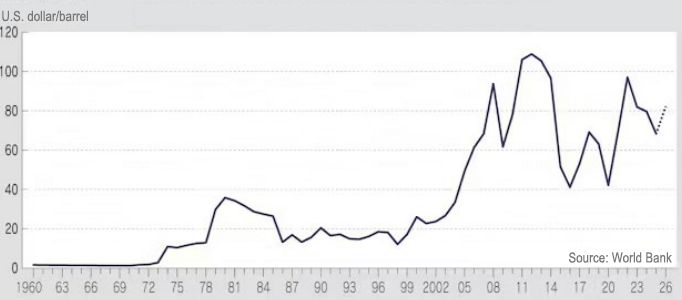
Following Russia’s aggression against Ukraine, oil supply constraints pushed up the prices of goods and services, leading to wage hikes and an acceleration of overall inflation. Countries conduct policy management under the assumption that international oil prices are a given. However, in reality, national policies affect crude oil prices, causing price fluctuations by affecting oil demand. Because each country’s policy influences oil prices, the optimal approach would be to internationally coordinate the implementation of monetary and fiscal policy.
Normally, uncoordinated monetary policy is considered overly restrictive (tight). However, according to Professor Werning, monetary policy management conducted in response to rising oil prices tends to become overly accommodative (easy). Since oil demand increases in tandem with domestic economic activity, countries unilaterally implementing uncoordinated monetary policy create a bias toward excessive accommodation.
In other words, at times of higher oil prices, living standards improve when countries universally adopt monetary policy that is more restrictive than they would choose independently. This logic applies beyond the field of monetary policy to the question of how countries should manage oil consumption volume.
Countries determine their oil consumption volumes under the assumption that oil prices are an external condition beyond their control, but in reality, oil prices are determined based on fluctuations in countries’ oil demand. If countries unilaterally determine oil consumption volumes without recognizing this, overconsumption arises, lifting oil prices even further.
To improve living standards, it is desirable for countries to reduce oil consumption in a coordinated manner. Utilizing subsidies to maintain consumption may be necessary as temporary measures to mitigate the dramatic impact of rising oil prices, but in the long run, they return as a cost to the people in the form of even higher oil prices.
At the CIGS conference, Associate Professor Sara Moreira of Northwestern University provided empirical evidence that price rigidity is not a short-term phenomenon but that it persists over time, and theoretically demonstrated that inflation therefore affects long-term economic growth.
As a result of a survey on sales prices of non-durable and semi-durable goods, she found that goods prices hardly rise over their life cycles. Consequently, new products are priced 10 to 20% higher than existing products at their market launch, after which their real prices decline by 2 to 3% annually over the following years because of inflation. The research also showed that new product prices tend to be higher in sectors where price rigidity is stronger. There may be social norms that discourage the raising of prices for existing products.
The benefits of innovation embodied in new products are gradually eroded by inflation. Theoretically, inflation has long-term effects on innovation and economic growth rates. This challenges the conventional view that monetary policy affects only short-term business cycles.
For your reference, Professors Oikawa Koki and Ueda Kozo of Waseda University, in a paper published in 2015, also pointed out the possibility that inflation affects economic growth rates through its effects on innovation.
According to Moreira’s theory, inflation erodes the profits generated by innovation. On the other hand, because inflation and the introduction of new products provide opportunities to raise prices, inflation can increase incentives for launching new products and thereby promote innovation.
In the end, the effects of inflation cannot be characterized in simple terms, and Moreira’s theory does not offer clear-cut estimates as to an optimal inflation rate. Even so, an optimal inflation rate that maximizes the economic growth rate surely exists, and it is presumed to be relatively low. The popular view has been that monetary policy is a tool for smoothing business cycles. However, if monetary policy has long-term effects on economic growth, it may be necessary to develop policy from a longer-term perspective.
At the CIGS conference, Professor Vasco Carvalho of the University of Cambridge presented the argument that the widening of inequality hinders innovation and curbs economic growth.
Using recent, large-scale transaction data, he showed that the level of innovation, as measured in terms of the number of patents obtained, is lower among firms serving high-income consumers. The top 1% of income earners tend to consume goods and services with lower levels of innovation. Innovation tends to emerge in mass-market goods and services, whereas luxury goods and premium-brand products purchased mainly by high income earners exhibit lower levels of innovation.
The modern U.S. economy is characterized by expanding markets for such “low-innovation goods,” purchased by the wealthy, alongside a shrinking market for highly innovative mass-market goods. As a result, the incentive for innovation weakens, economy-wide innovation is hindered, and economic growth slows. In short, widening inequality lowers economic growth by undermining innovation.
According to estimates by Professor Carvalho, 40% of the decline in the growth rate of per-capita GDP in the United States between the 1980s (2.13%) and the 2010s (1.65%) is attributable to rising inequality.
In other words, demand-side policy measures intended to reduce inequality (redistributive policies) could indirectly affect the supply side of the economy through innovative actions implemented by firms, enhancing economic growth.
◆◆◆
From the abovementioned studies, we can conclude that selfish, short-term, one-dimensional (partial-equilibrium) policies cause economic problems.
According to Werning’s theory, when individual countries implement selfish policies with respect to oil prices, oil demand expands excessively, imposing a burden on living standards through higher inflation. When countries reduce domestic demand for the sake of international coordination, that ultimately contributes to their own long-term interests. As the saying goes, “To help others is to help yourself.”
Moreira’s theory suggests that the optimal inflation rate from a long-term perspective is different from the optimal one from a short-term perspective. It is essential to explore what the optimal inflation target is when judged against long-term benefits.
Meanwhile, Carvalho’s argument suggests that reducing inequality promotes innovation, challenging the one-dimensional, stereotypical idea that “households consume while firms innovate.” In short, it underscores the importance of looking at the economy from a general-equilibrium perspective.
Such economic research reminds us that policymaking requires a “macro mindset,” which pursues overall optimization, long-term benefits, and general-equilibrium thinking.
>> Original text in Japanese
* Translated by RIETI.
June 16, 2026 Nihon Keizai Shimbun
