



The purpose of this site is to publish the results of the Asian Monetary Unit (AMU) and AMU Deviation Indicators calculated by RIETI Faculty Fellow OGAWA Eiji and SHIMIZU Junko as a part of RIETI's The Optimal Exchange Rate Regime for East Asia project headed by Faculty Fellow ITO Takatoshi. The AMU was created through the collaborative efforts of Hitotsubashi University Global Global Centers of Excellence (COE)'s Research Unit for Statistical and Empirical Analysis in Social Sciences project and RIETI.
There are three kinds of AMU based upon the currency composition and basket weights as follows:
- AMU (13 countries)
- AMU-wide (13 AMU + Australia, New Zealand, and India)
- AMU-cmim (13 AMU + Hong Kong)
Please refer to each section for detailed information.
About the AMU Page
The Purpose of AMU and AMU Deviation Indicators for East Asian Currencies
The monetary authorities of East Asian countries have been strengthening their regional monetary cooperation since the Asian currency crisis of 1997. This monetary cooperation after the crisis resulted in the Chiang Mai Initiative (CMI), which was established by the ASEAN + 3 (Japan, South Korea, and China) as a network of bilateral and multilateral swap arrangements to deal with a currency crisis in member countries. Under the CMI, the monetary authorities should conduct surveillance to prevent a currency crisis in the future.
As one of the new surveillance criteria, we propose the creation of an Asian Monetary Unit (AMU) and AMU Deviation Indicators for East Asian currencies. These should contribute to coordinated exchange rate policies in East Asia, thereby enhancing the monetary authorities' surveillance capabilities. We calculate the AMU as a weighted average of East Asian currencies according to the method used to calculate the European Currency Unit (ECU) adopted by EU countries under the European Monetary System (EMS) prior to the introduction of the euro. The AMU Deviation Indicators for each East Asian currency are measured to show the degree of deviation from the Benchmark Rate for each of the East Asian currencies in terms of the AMU.
We provide Nominal AMU Deviation Indicators on a daily basis and Real AMU Deviation Indicators, which are adjusted for differences in inflation, on a monthly basis. The Real AMU Deviation Indicators are more appropriate for conducting surveillance on the effects of changes in exchange rates on the real economy, while the Nominal AMU Deviation Indicators are more useful for monitoring their day-to-day deviations from the AMU.
Figures
Click on the figures to enlarge
AMU
(vs. US$ - euro, US$, and euro)
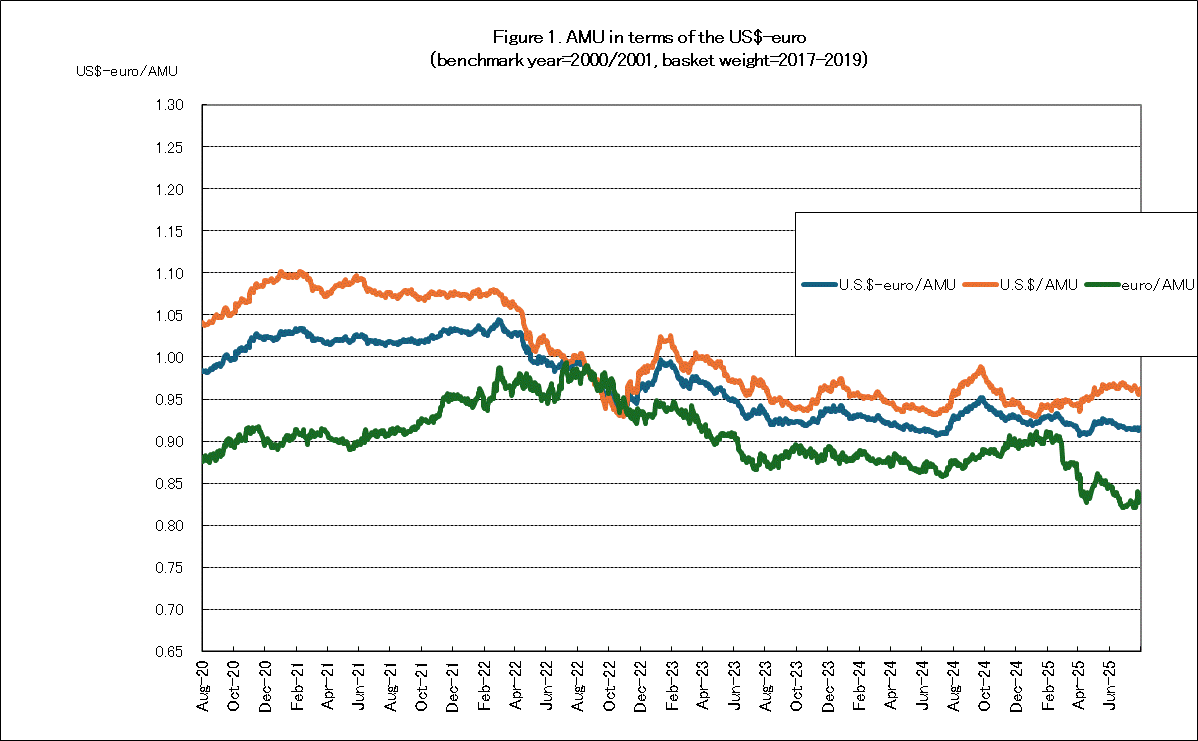
(13 East Asian currencies)
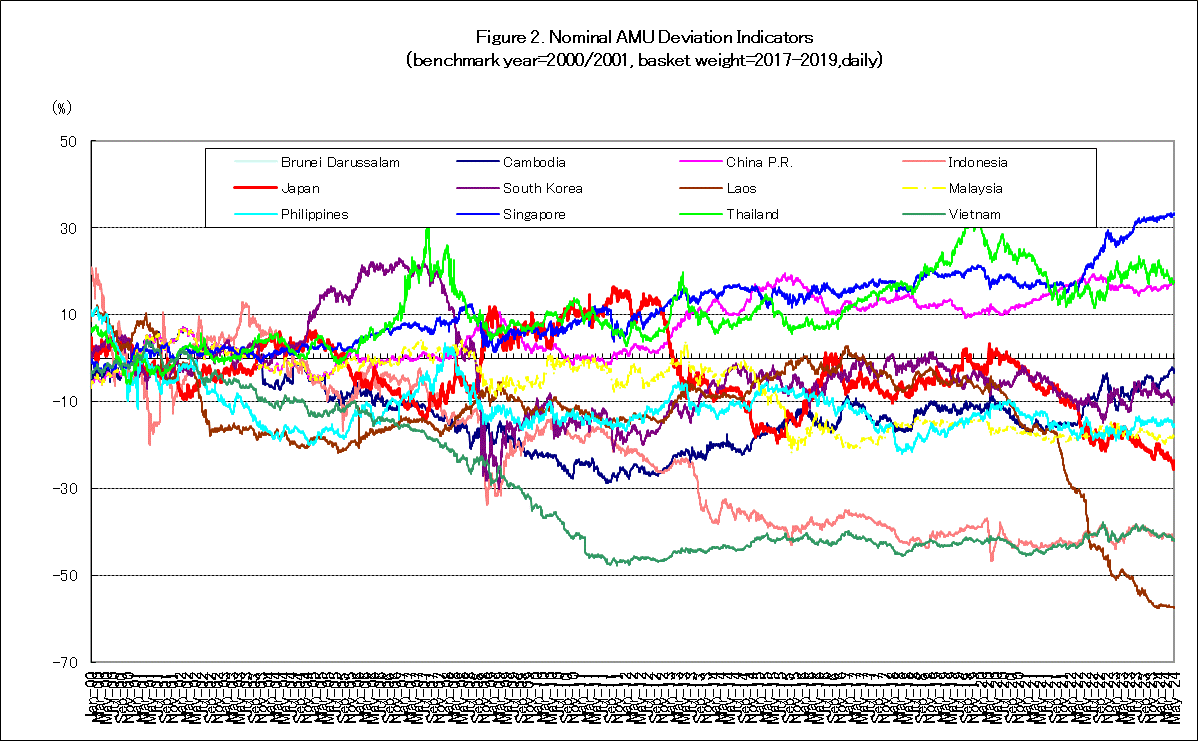
(13 East Asian currencies)
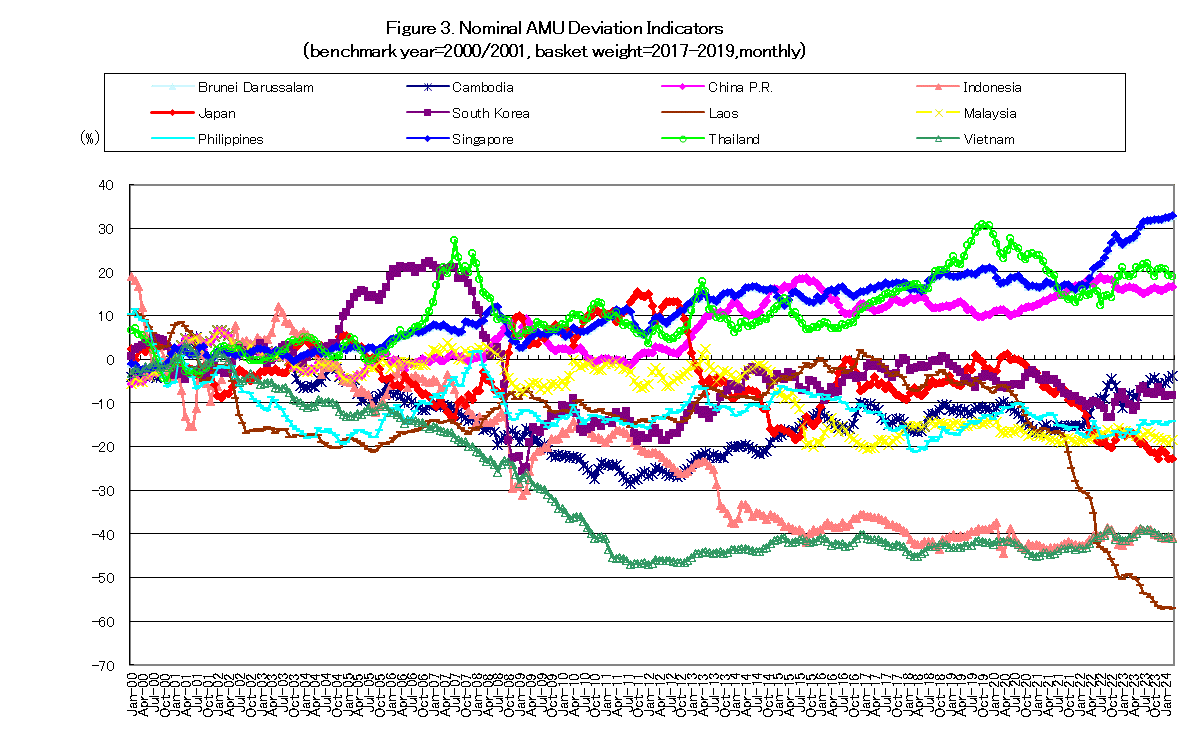
(13 East Asian currencies)
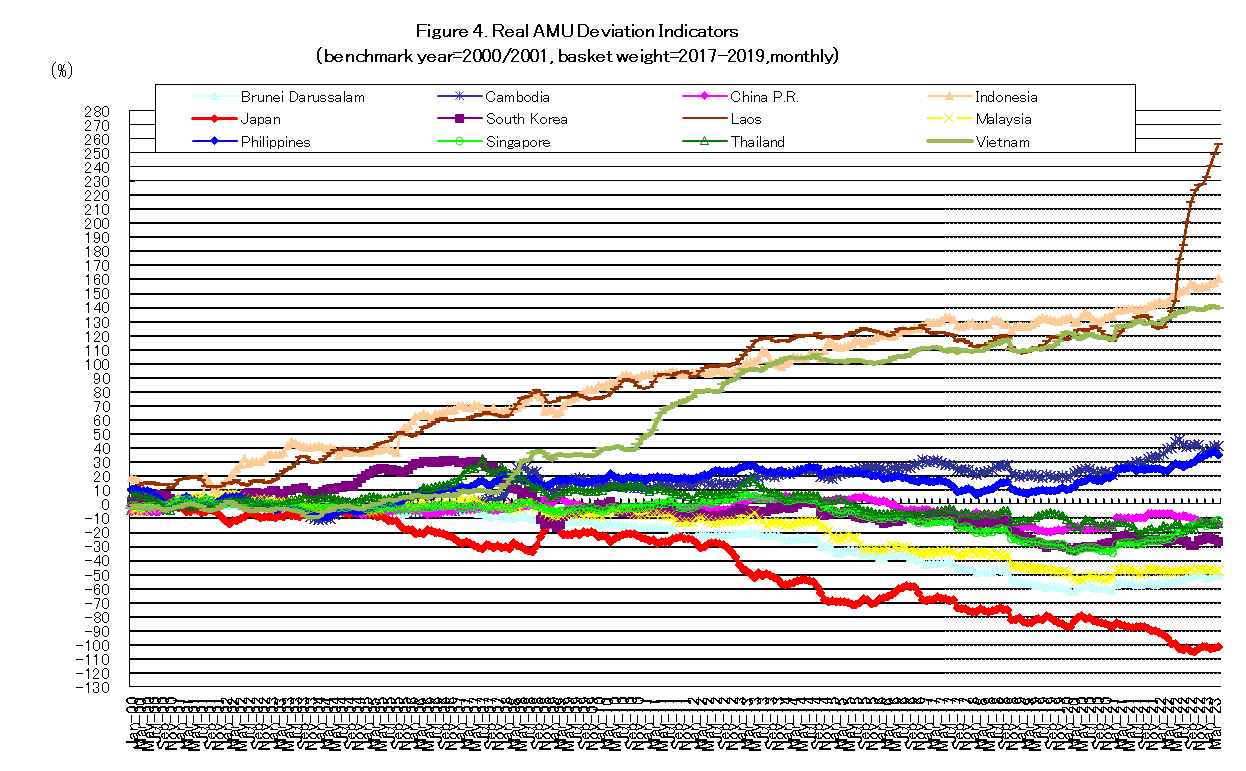
AMU component countries: ASEAN (Brunei, Cambodia, Indonesia, Laos, Malaysia, Myanmar, Philippines, Singapore, Thailand, Vietnam) +3 (Japan, South Korea, China)
Standard of Real AMU Deviation Indicators data in Myanmar is drastically high compared with other countries. Therefore, we have excluded its standard from the graph.
AMU-cmim
(vs. US$ - euro, US$, and euro)
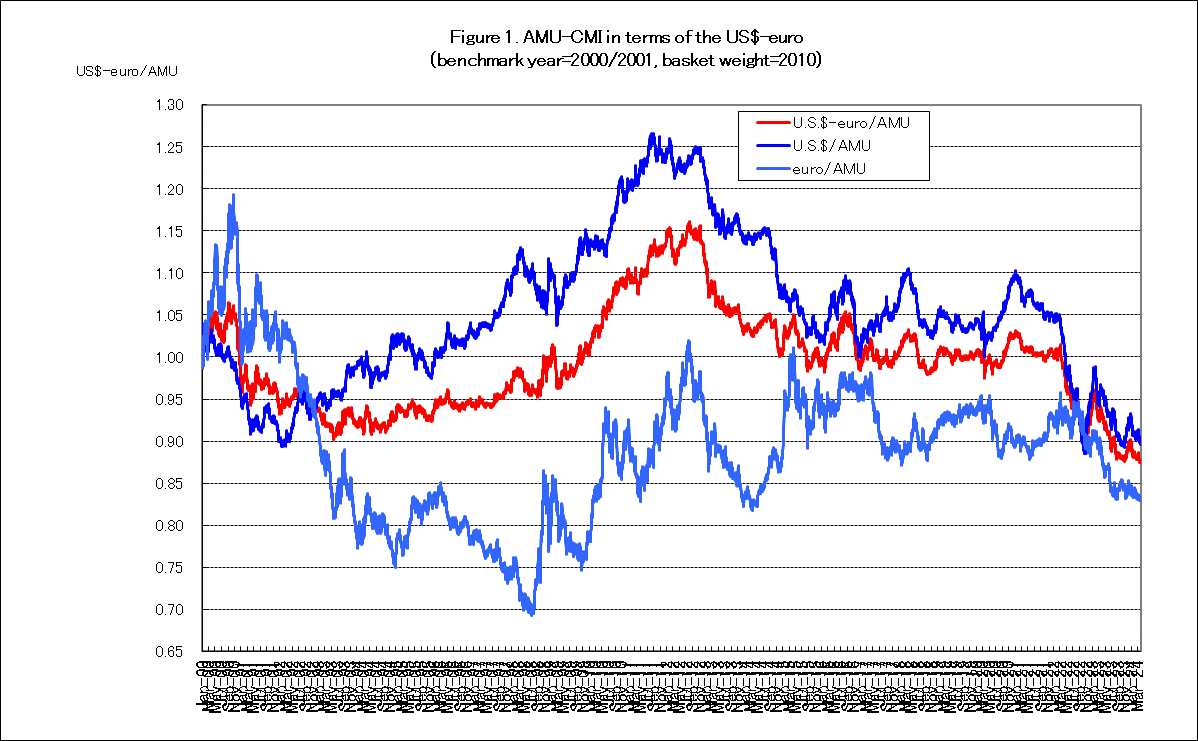
(14 East Asian currencies)

(14 East Asian currencies)
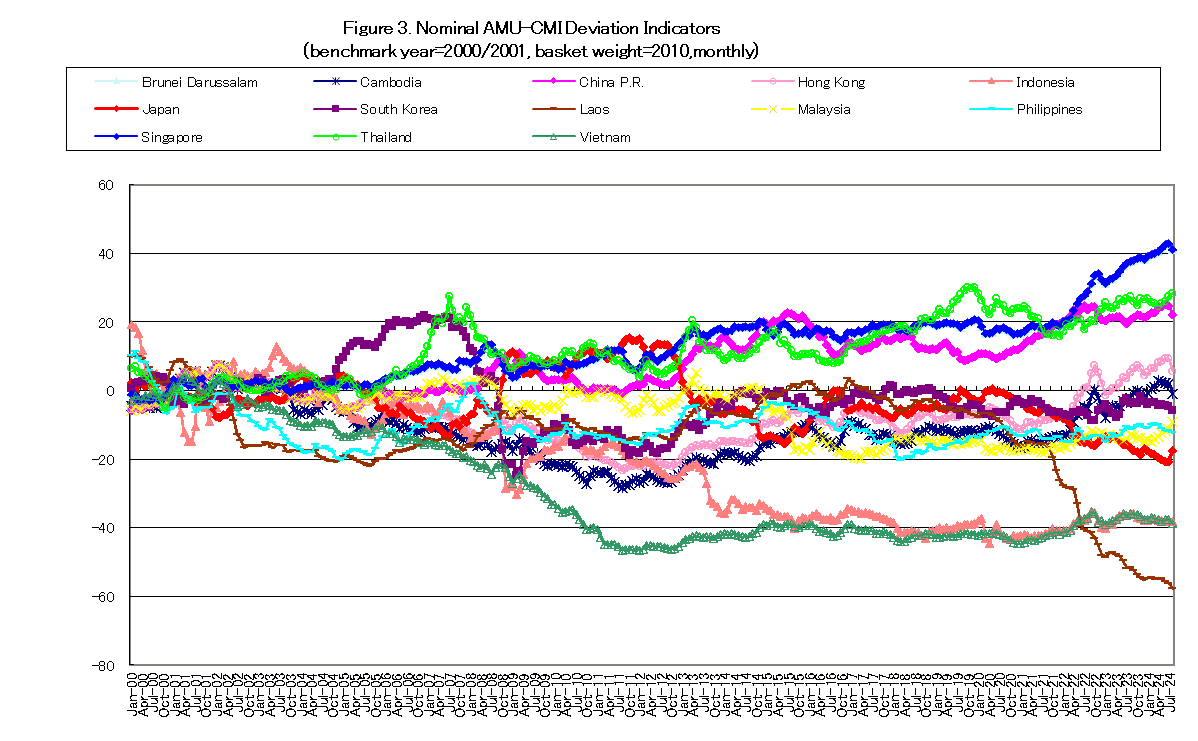
(14 East Asian currencies)
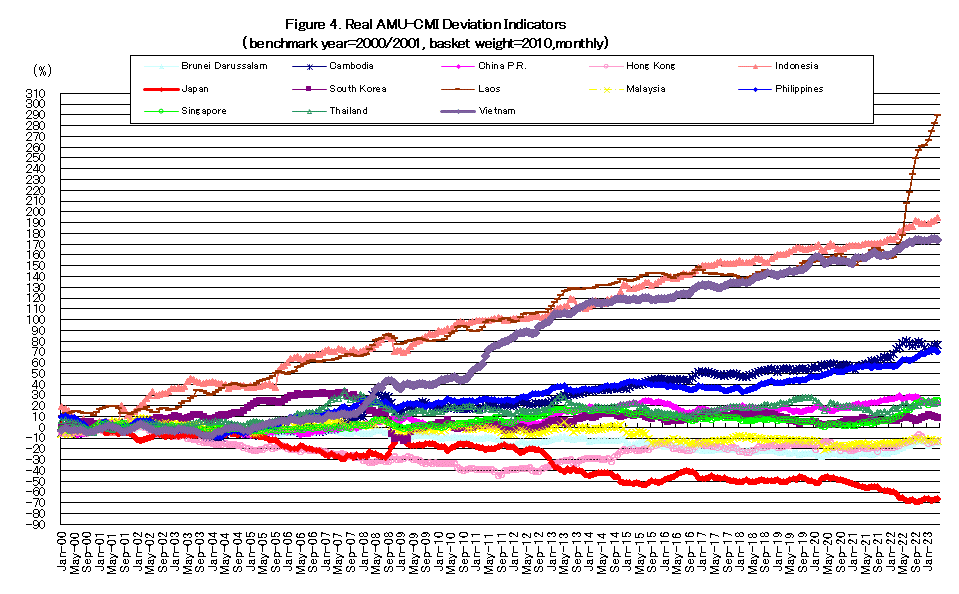
AMU-cmim component countries: ASEAN (Brunei, Cambodia, Indonesia, Laos, Malaysia, Myanmar, Philippines, Singapore, Thailand, Vietnam) +4 (Japan, South Korea, China, Hong Kong)
Data period:January, 2000 to present
Standard of Real AMU Deviation Indicators data in Myanmar is drastically high compared with other countries. Therefore, we have excluded its standard from the graph.
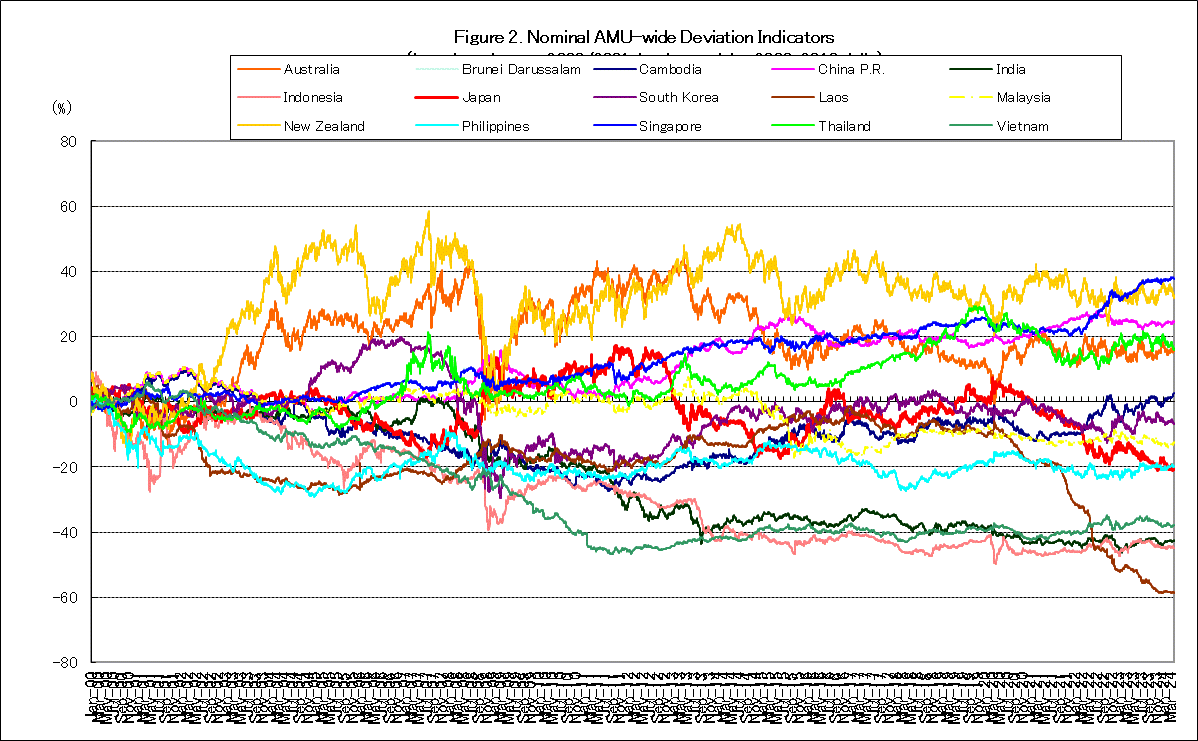
AMU-wide
(vs. US$ - euro, US$, and euro)
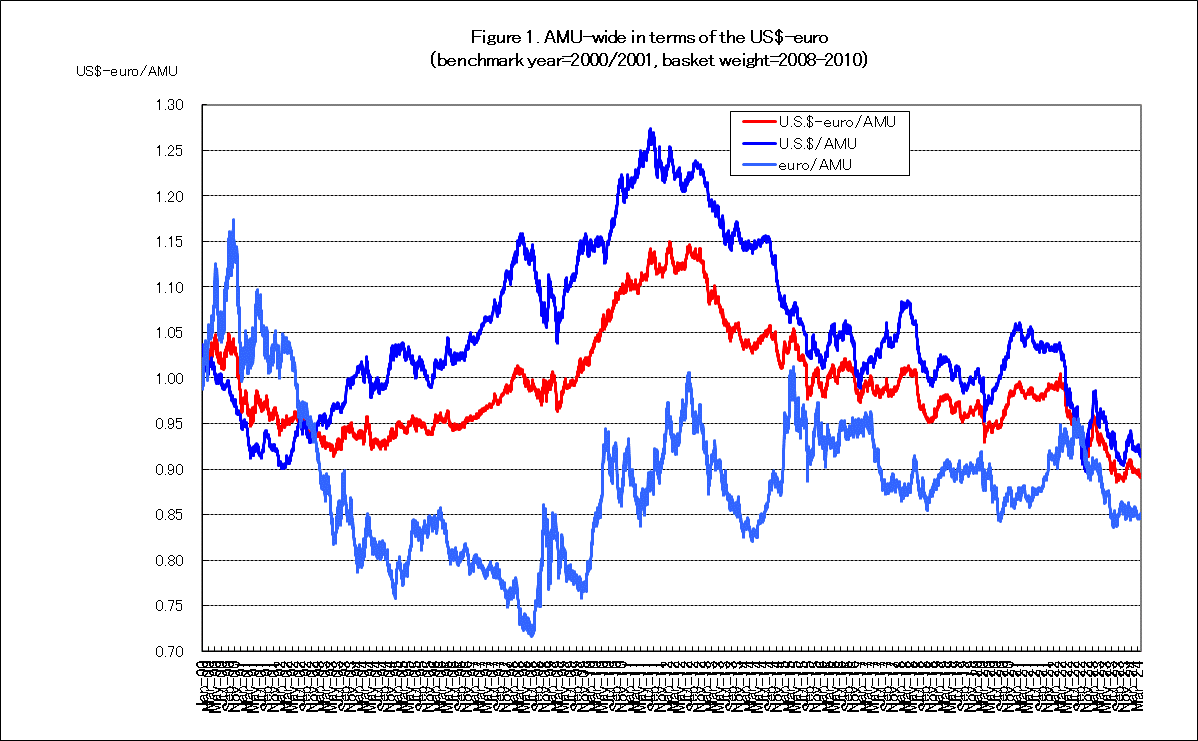
(16 East Asian currencies)
(16 East Asian currencies)
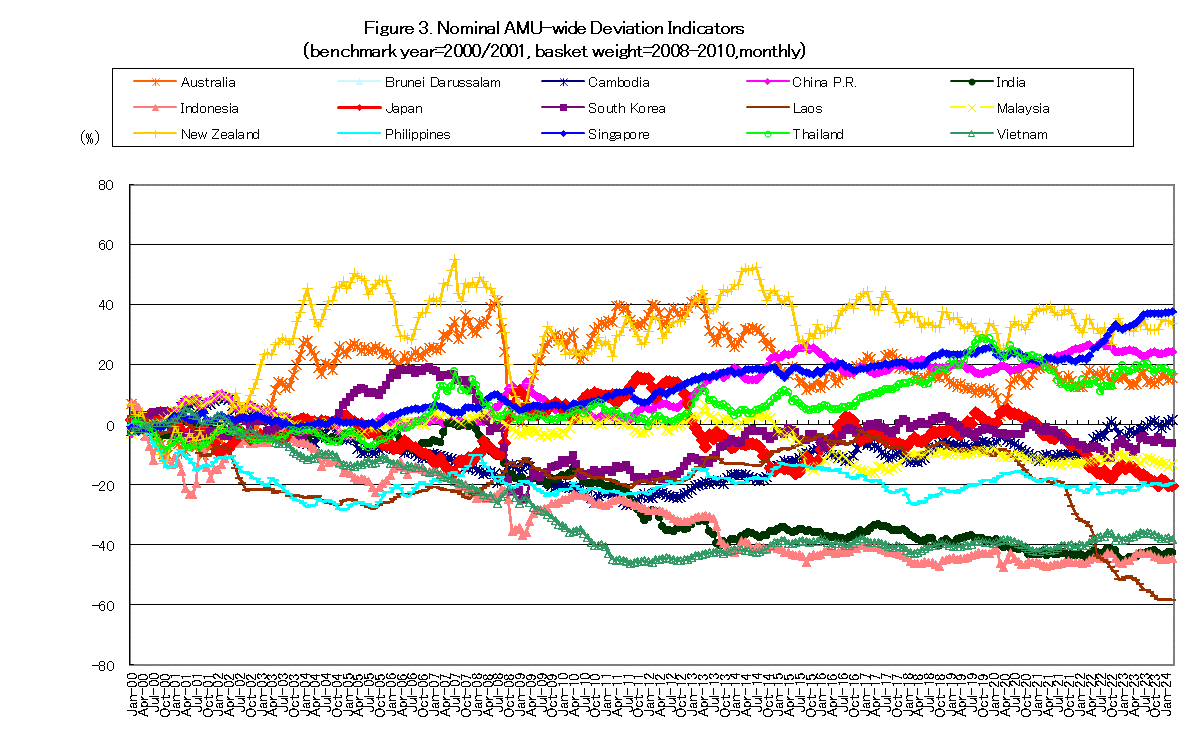
AMU-wide component countries:ASEAN10 +3 (Japan, South Korea, China) +3 (Australia, New Zealand, India)
Data period: January, 2000 to present
Calculation Method
Data
Daily Data (January 2000 to present)
- Value of AMU [CSV]
- Below: 30 most recent results
US$-euro, US$, euro, ASEAN 10 currencies, Japanese yen, Korean won, Chinese yuan
- Nominal AMU Deviation Indicators (13 currencies) [CSV]
- Below: 30 most recent results
ASEAN 10 currenices, Japanese yen, Korean won, Chinese yuan
Monthly Data (January 2000 to present)
- Nominal AMU Deviation Indicators (13 currencies) [CSV]
- Below: 30 most recent results
ASEAN 10 currencies, Japanese yen, Korean won, Chinese yuan
- Real AMU Deviation Indicators (13 currencies) [CSV]
- Below: 30 most recent results
ASEAN 8 currencies, Japanese yen, Korean won, Chinese yuan
AMU-cmim Data (January 2000 to present)
- AMU-cmim Currencies Daily Exchange Rates[CSV]
- Daily Nominal AMU-cmim Deviation Indicators (14 East Asian currencies)[CSVB]
- Monthly Average Nominal AMU-cmim Deviation Indicators (14 East Asian currencies)[CSV]
- Monthly Average Real AMU-cmim Deviation Indicators (14 East Asian currencies)[CSV]
AMU-wide Data (January 2000 to present)
- AMU-wide Currencies Daily Exchange Rates[CSV]
- Daily AMU-wide Deviation Indicators for Asian currencies (%)[CSV]
- Monthly Average Nominal AMU Deviation Indicators (16 East Asian currencies)[CSV]
Daily and Monthly data: Updated at the beginning of each month
If you would like to have data regarding the Weighted Average Index (Ogawa and Yoshimi, 2009) of AMU Deviation Indicators, please contact us via the e-mail address below.
Contact

